What Is Happening and Why It Matters to You
If you have been to a petrol station this week, the numbers at the pump are not a mistake. On April 14, 2026, the Energy and Petroleum Regulatory Authority (EPRA) announced one of the steepest single-cycle increases in fuel prices in Kenya in years. Super Petrol rose by Ksh28.69 per litre. Diesel went up by Ksh40.30. These were not the increases that were calculated before government intervention. The true market-driven increases would have been far sharper.
The reason traces back to a narrow waterway in the Persian Gulf that most Kenyans have never seen but whose conditions now determine what they pay to travel to work, what a kilo of tomatoes costs at the market, and whether a small business can afford to keep its generator running.
Table of Contents
The War That Changed Everything
On February 28, 2026, the United States and Israel launched coordinated military strikes against Iran, beginning what has since been described by the head of the International Energy Agency as the greatest global energy security challenge in history.
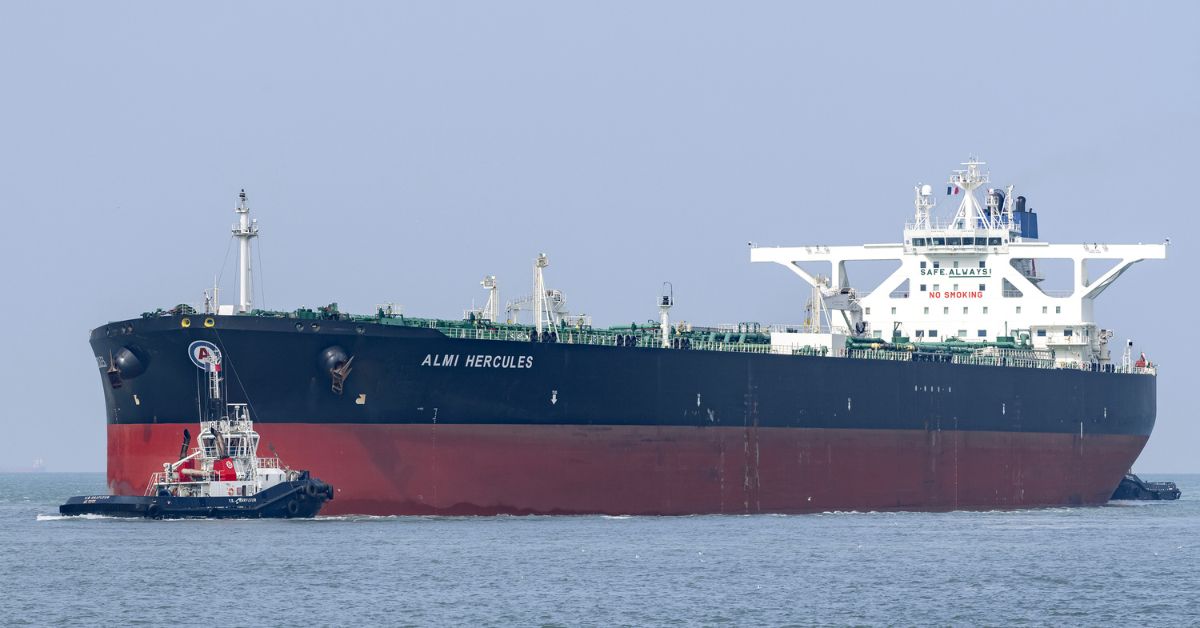
Iran responded with missile and drone strikes targeting Gulf states that host US military forces, and crucially, it moved to restrict movement through the Strait of Hormuz. That narrow waterway, just 21 nautical miles wide at its tightest point between Iran and Oman, is the passage through which roughly 20 million barrels of crude oil and petroleum products flow every single day. That figure represents approximately one-fifth of global petroleum consumption and one-quarter of all oil traded by sea.
When traffic through the Strait was disrupted, global oil markets reacted immediately. Brent crude, the international benchmark, surged past $100 per barrel and at certain points climbed toward $120. Goldman Sachs analysts estimated that traders were demanding about $14 more per barrel than before the conflict, simply to account for the risk premium.
By the time Kenya’s EPRA was calculating prices for the April to May cycle, the landed cost of importing Super Petrol into Kenya had jumped by 41.53 percent compared to December 2025. The landed cost of Diesel had risen by 68.72 percent. Kerosene had nearly doubled, climbing by 105.15 percent.
Why Kenya Is Especially Vulnerable
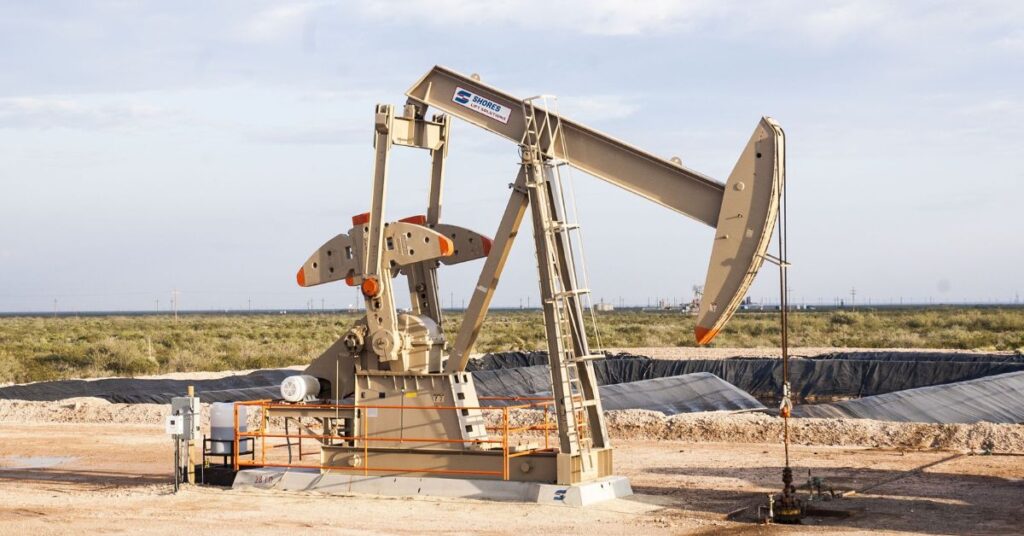
Kenya does not produce oil. Every drop of petrol, diesel, and kerosene that enters this country is imported, and the vast majority of it comes from the Middle East under the government-to-government (G-to-G) arrangement with Gulf suppliers. This procurement model has advantages in terms of price negotiation and supply continuity, but it places Kenya’s fuel security entirely at the mercy of events along one geographic corridor.
Treasury Cabinet Secretary John Mbadi delivered a sobering disclosure to a parliamentary committee on April 2, 2026: Kenya holds only 16 days’ worth of petrol stock, 19 days of diesel, and 49 days of jet fuel and kerosene. For a country that consumes approximately 100,000 barrels of fuel daily, those are thin buffers against a disruption of the scale now unfolding in the Middle East.
The previous pricing cycle (March 15 to April 14, 2026) was shielded because the fuel sold at those pumps had been priced and shipped before the war escalated. Mbadi was clear that protection would not hold. The fuel being imported for May and June 2026 will be priced at wartime rates, and there is no certainty about when those rates will fall.
What EPRA Announced and What It Means at the Pump
On April 14, 2026, EPRA released the new maximum retail petroleum prices for the period running from April 15 to May 14, 2026. After the government subsequently cut VAT on petroleum from 13 percent to 8 percent, EPRA revised prices downward on April 16. The final Nairobi figures for the current cycle are:
Prices vary by city. For the full, verified price list across Nairobi, Mombasa, Kisumu, Nakuru, and Eldoret, visit the official EPRA pump prices page directly.
The government also applied Ksh6.2 billion from the Petroleum Development Levy Fund as a subsidy to absorb what would otherwise have been an even larger jump at the pump.
The Ripple Effects on Everyday Life
Fuel is not merely what goes into your car. In Kenya, it is the foundation of how goods move, how food reaches markets, how businesses operate, and how families budget for the month.
Public Transport
The Matatu Owners Association announced a 25 percent fare increase effective April 15, 2026. Diesel constitutes the single largest operating cost for fleet operators, and the Ksh40 per litre increase cannot be absorbed. A vehicle that previously earned around Ksh8,000 a day now burns through an extra Ksh2,400 in diesel alone.
Freight and Logistics
The Kenya Transporters Association noted that fuel accounts for roughly 55 percent of total operating costs in road freight. A 24 percent increase in diesel translates directly into higher delivery costs for goods across every sector, from agricultural produce to construction materials.
Food and Household Goods
When it becomes more expensive to move goods, the cost of those goods rises. This is not a projection. It is the standard chain reaction that every major fuel increase in Kenya triggers. Traders reprice to account for higher delivery costs, and those costs land on consumers at the final point of sale.
Small Businesses and Manufacturers
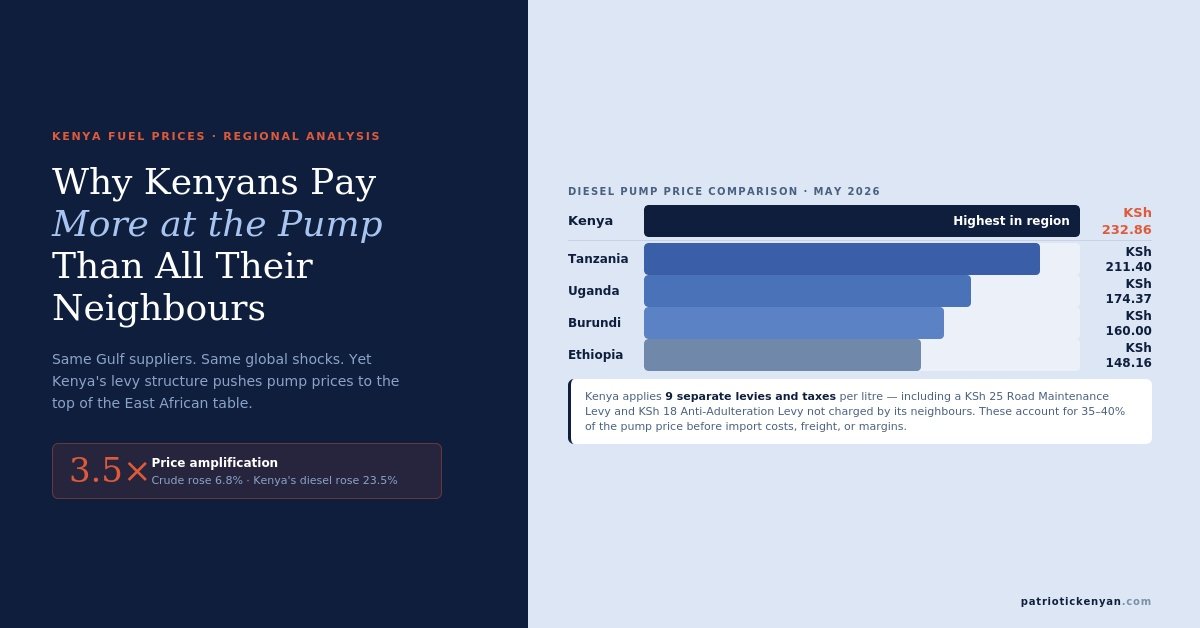
Businesses that rely on generators, industrial machinery, or fleet vehicles face a direct increase in operating costs that was not in their budgets at the start of the year. A litre of fuel in Kenya already carries nine separate government levies before it reaches any pump, including a road maintenance levy of Ksh25 per litre and an anti-adulteration levy of Ksh18 per litre. The global shock has compounded an already heavily taxed commodity.
What the Government Has Done
The Ruto administration has deployed three measures to limit the consumer impact:
Energy CS Opiyo Wandayi acknowledged that these measures, while meaningful, do not eliminate the underlying pressure. The government is also evaluating a structural change to how VAT on fuel is calculated, shifting from a percentage-based model to a fixed per-litre tax. That reform requires legislative approval and will not be immediate.
What Comes Next
The next EPRA price review is scheduled for May 14, 2026. Whether prices fall, hold, or rise again depends on three things that are outside Kenya’s direct control: the trajectory of the Iran conflict, the status of shipping through the Strait of Hormuz, and whether ceasefire talks between Washington and Tehran produce a durable agreement.
A temporary ceasefire raised brief hopes. Oil prices dipped marginally when diplomatic signals emerged. But analysts caution that even if hostilities pause, infrastructure damage across Gulf production facilities and the disruption to tanker routing will take time to fully resolve. Supply chains that have been rerouted do not snap back instantly.
Kenya’s fuel stocks are being managed carefully, but 16 days of petrol reserves leaves little room for error if incoming tankers face further delays. The Treasury has been direct with Parliament: the fiscal cost of continued stabilisation will be enormous, and there are limits to how long it can be sustained at current levels.
For the latest official prices in your city, visit the EPRA pump prices page directly.
Frequently Asked Questions
Why did fuel prices in Kenya go up if the war is happening in Iran and not here?
Kenya imports all of its petroleum from the Middle East, primarily through the Strait of Hormuz. When that shipping route is disrupted, the global price of crude oil rises and the cost of importing fuel into Kenya increases sharply. EPRA calculates pump prices based on what it actually costs to land fuel in Kenya, so when international oil prices surge, those costs are passed on to consumers. Kenya has no domestic oil production to act as a buffer.
Why did diesel go up more than petrol?
The landed cost of diesel increased by 68.72 percent between December 2025 and the latest pricing cycle, compared to 41.53 percent for petrol. This reflects the specific dynamics of diesel supply chains in the current conflict, including greater disruption to the refinery routes and cargo types that supply diesel to East Africa. Diesel is also the fuel most widely used in commercial transport and freight, making its pricing particularly sensitive to shipping disruptions.
Will prices come down when the war ends?
Historically, oil prices have declined after conflicts that triggered supply disruptions, but the recovery is rarely immediate. Physical infrastructure damaged during conflict takes time to repair. Tanker routes that were rerouted do not return to normal overnight. Insurance premiums for Gulf shipping remain elevated even during ceasefires. The government has said that if the US-Israel-Iran war ends, prices will fall, and that is a reasonable expectation over time. The speed of that decline will depend on how quickly the Strait of Hormuz returns to full, unimpeded operation.
Is there anything ordinary Kenyans can do to reduce the impact?
There is no individual action that removes the global price shock, but there are practical adjustments. Combining trips and reducing unnecessary driving cuts petrol consumption. For small business owners, auditing generator usage and shifting to daytime operations where solar alternatives are viable can reduce diesel costs. Commuters can explore carpooling arrangements or flexibility in travel timing to avoid peak-fare periods. At the national level, engaging with the policy conversation matters: advocate for greater strategic reserve capacity, energy diversification, and transparent use of the Petroleum Development Levy Fund, which exists precisely for moments like this one.