The Question Every Kenyan Is Asking
Fuel prices have just hit Ksh197.60 per litre for Super Petrol in Nairobi. As covered in the Iran war drove the April EPRA announcement, the government raided the Petroleum Development Levy Fund to keep prices from going even higher. Somewhere in all this, a reasonable Kenyan is asking one reasonable question: We discovered oil in Turkana. Why are we still begging the Middle East?
It is the right question. The answer is not comfortable, and nobody in government is rushing to give it to you straight. This piece will.
Table of Contents
The Oil Is Real. The Pipeline Is Not.
Turkana’s South Lokichar Basin holds an estimated 560 million barrels of recoverable crude oil, a discovery made in 2012 that has been producing headlines ever since. The problem is not whether the oil exists. The problem is getting it from a remote semi-arid county 800 kilometres from the coast to anywhere it can actually be used.
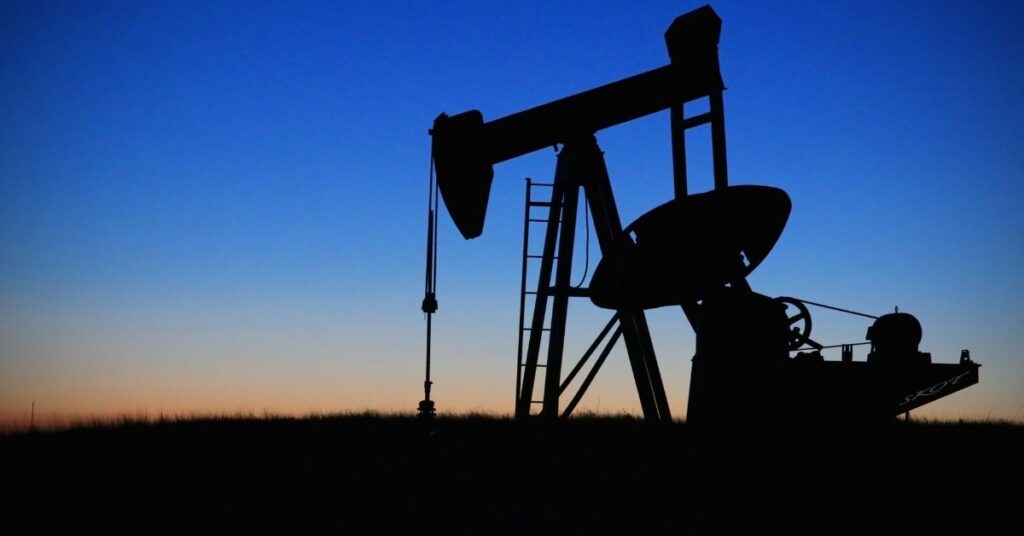
Turkana crude has a 40 percent waxy content. Below 40 degrees Celsius, it does not flow; it solidifies. Every truck or pipeline carrying it must actively heat it the entire journey. That is not a footnote; it is a fundamental engineering cost that runs through every calculation on the project’s viability.
The 895-kilometre Lokichar-Lamu pipeline would solve this at scale? Still on paper. Still awaiting financing. Still years away from completion. For now, the plan is to truck early oil to Mombasa, exactly as Kenya did during the short-lived pilot scheme in 2018 and 2019, when the country managed to export a single cargo of 200,000 barrels after stockpiling it for months.
Kenya consumes approximately 100,000 barrels of refined petroleum every single day. Trucking crude across unpaved northern roads is not a supply chain. It is a photo opportunity.
Crude Oil Is Not Fuel
This is where many of the social media conversations collapse. Even if Turkana were producing at full tilt tomorrow, the oil that comes out of the ground is raw crude. It cannot go directly into a matatu tank or a generator.
Crude oil has to be refined and processed into petrol, diesel, kerosene, and jet fuel before it is of any use to a household or a business. Kenya’s only refinery, the Kenya Petroleum Refineries Limited (KPRL) in Mombasa, was shut down in 2013 after a planned $1.2 billion upgrade was abandoned. Consultants advised that importing finished, refined products was cheaper than refining locally. That logic worked fine when global markets were stable.
Today, Kenya has crude oil it cannot refine, a refinery it closed over a decade ago, and imported fuel arriving on wartime-priced tankers. In 2019, the government made its position explicit: Kenya would not build a new refinery, opting instead to export raw crude and continue importing refined products. That policy remains in force today.
The result is a country that loses margin at both ends, selling cheap crude and buying expensive fuel, with no buffer against exactly the kind of global shock now unfolding.
So Where Is the Oil Going?
For export. That is the stated plan, and the government has been consistent about it. Energy Cabinet Secretary Opiyo Wandayi confirmed in February 2026 that Kenya expects its first oil export before December 31 this year. Initial production is targeted at 20,000 barrels per day, with ambitions to reach 50,000 barrels per day by 2032.
The foreign exchange earnings from those exports could, over time, strengthen the shilling and indirectly reduce the cost of importing fuel. That is a real benefit, but it operates over years, not months, and it does nothing for the Kenyan paying Ksh196.63 for a litre of diesel today.
For context: Kenya burns 100,000 barrels of refined fuel daily. Even at peak projected production of 50,000 barrels of raw crude, the volumes are not close to covering domestic consumption, and none of it arrives pre-refined.
The Gulf Energy Question
Mention Turkana oil online, and you will quickly encounter a more pointed argument: that Kenya’s oil was not just delayed, it was quietly handed to a politically connected company on sweetheart terms.
The concern has a basis in documented fact. Gulf Energy Limited, a Nairobi-based fuel trading company with no prior upstream oil production experience, acquired Tullow Oil’s entire Turkana stake in September 2025 for $120 million. It then became the operator of Kenya’s most significant upstream petroleum project. At the same time, Gulf Energy holds a central role in Kenya’s government-to-government (G-to-G) fuel import scheme, meaning the same company now controls oil from the wellhead in Turkana through to supply at the Kenyan market.

Under the revised production-sharing contract, Gulf Energy is permitted to recover up to 85 percent of annual crude output as cost recovery before Kenya’s profit share is calculated. The previous limit with Tullow was 65 percent. The government also granted Gulf Energy and its subcontractors exemptions from VAT, import declaration fees, withholding tax, and the railway development levy.
Nairobi Senator Edwin Sifuna went further, calling the arrangement potentially the administration’s “biggest scandal yet” and raising questions in Parliament about ownership changes that occurred at Gulf Energy before the deal was concluded. The Senate Energy Committee opened the Field Development Plan and production-sharing contracts for public comment in early 2026, reflecting genuine legislative discomfort with the terms.
None of this has been tested in court, and Gulf Energy has denied the characterization of the deal as a capture. Parliament’s ratification process is still ongoing. But the questions are legitimate, the contract terms are verifiable, and a company with no upstream track record now controls Kenya’s only oil project. That is worth watching.
What This Actually Means for the Current Crisis
To put it plainly: Turkana oil is not a solution to the fuel price crisis triggered by the Iran war. Not this month. Not this year. Possibly not this decade in any meaningful consumer sense.
The reasons stack up in sequence:
- Production has not started.
- The pipeline does not exist.
- The refinery was shut a decade ago and will not reopen.
- The government’s own plan is to export the crude, not refine it domestically.
- Even if all of that were resolved tomorrow, Kenya’s volumes are too small to move the global price of oil.
The short-term answer to the current crisis is the same as it has always been: strategic reserves, a more diversified import base, better use of the Petroleum Development Levy Fund, and a serious conversation about whether closing the KPRL in 2013 was as smart as it looked at the time. You can track where official EPRA pump prices stand in your city in real time.
Turkana oil is real. Its potential is real. But it is a long game, and Kenyans paying Ksh197 per litre are not playing the long game right now.
Frequently Asked Questions
If Kenya has oil in Turkana, why doesn’t the government just use it to lower fuel prices?
Turkana crude is raw and unrefined. It cannot be put into a vehicle or a generator without first being processed into petrol, diesel, or kerosene. Kenya’s only refinery was shut down in 2013 and has not been replaced. Even if Turkana were producing commercially today, the government’s stated plan is to export the crude and continue importing refined products for domestic use. There is no infrastructure pathway that takes Turkana crude to your fuel tank.
When will Turkana oil actually start producing, and how much will Kenya get from it?
Gulf Energy, the current operator, is targeting first oil exports by December 1, 2026, pending final parliamentary ratification of the Field Development Plan. Initial production is set at 20,000 barrels per day, rising to 50,000 barrels per day by 2032. Kenya consumes around 100,000 barrels of refined fuel daily, so even at peak projected output, Turkana’s crude covers less than half of domestic consumption, and none of it arrives pre-refined. The government’s share of revenue will start at 50 percent of the profit from oil and rise at higher production levels.
Is the Gulf Energy deal as suspicious as some politicians are claiming?
The concerns are real enough to deserve scrutiny, and several are grounded in documented contract terms. Gulf Energy, a fuel trading company with no upstream production experience, acquired Turkana’s oil fields from Tullow in 2025 and now controls much of Kenya’s petroleum supply chain. The revised production-sharing agreement raises the company’s cost-recovery ceiling from 65 percent to 85 percent and grants sweeping tax exemptions. Senator Edwin Sifuna and others in Parliament have raised questions about ownership changes at Gulf Energy before the deal closed. The Senate has opened the documents for public comment. None of the allegations has been legally established, but the terms of the contract are a matter of public record and warrant close public attention.
Could Kenya build a new refinery and solve this problem permanently?
It has been discussed, but the economics are difficult. A commercially viable refinery typically requires processing capacity of at least 400,000 barrels per day. Kenya’s peak projected Turkana output is 50,000 to 100,000 barrels per day of crude, far short of what would justify the multi-billion-dollar investment in refining infrastructure. A modular or small-scale refinery handling 20 to 30 percent of crude domestically has been proposed by some analysts as a compromise that would reduce import dependence without requiring full-scale refining capacity. That option has not been formally adopted by the government. The 2013 decision to close the KPRL and outsource refining to international markets is now being re-examined in light of the current crisis, but reversing it is not a quick fix.