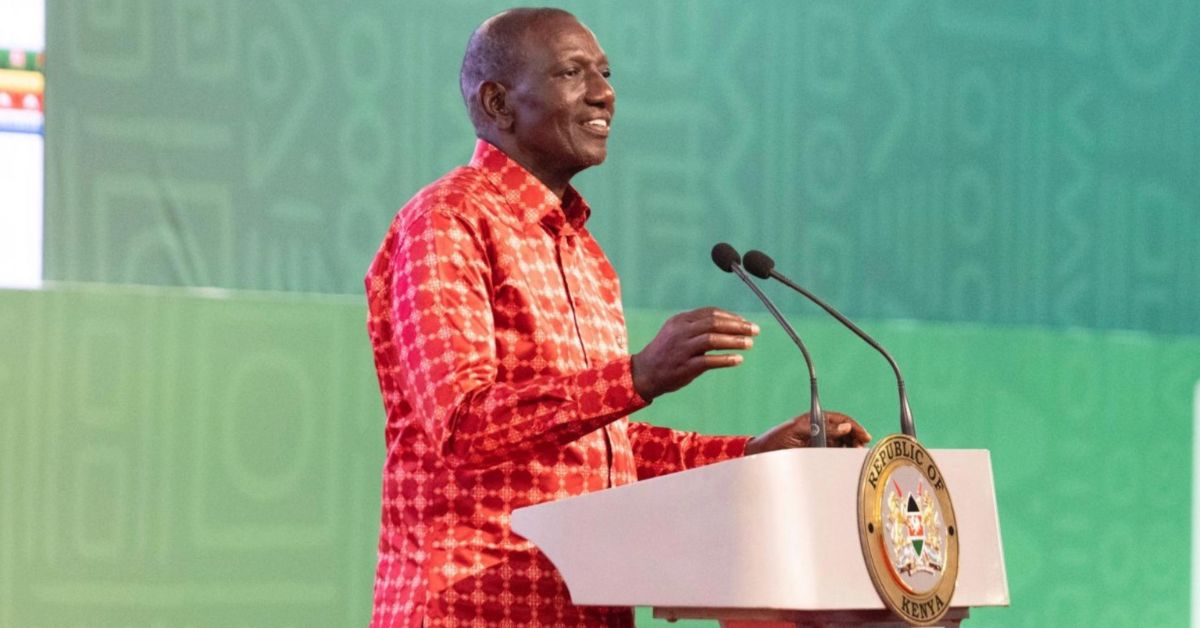
This William Ruto profile covers what much coverage of Kenya’s president leaves out: the full arc, from a disputed entry into politics in the 1990s to the specific promises he made to voters in 2022, and what the verified record shows since he took office. Ruto was inaugurated on 13 September 2022, having won on a bottom-up economic model he directed squarely at ordinary Kenyans. Political accountability requires that those promises be measured against verifiable facts, not slogans. This profile examines his origins, political history, documented commitments, and the evidence against each of them.
Table of Contents
Who He Is
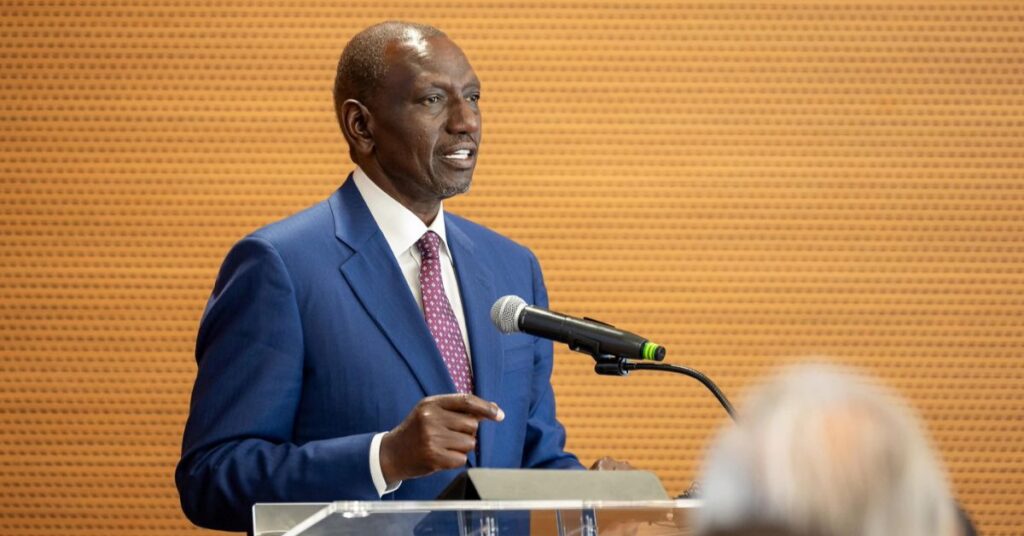
William Samoei Ruto was born on 21 December 1966 in Kamagut, Uasin Gishu County. He attended Kapsabet Boys High School before enrolling at the University of Nairobi, where he graduated in 1990 with a Bachelor of Science in Botany and Zoology. He subsequently earned a PhD in Plant Ecology from the same university, which was formally conferred in December 2018 following years of public and academic scrutiny regarding his progress.
Before politics, Ruto is widely reported to have worked in poultry farming in Sugoi, Uasin Gishu. That background became the foundation of the “hustler” political identity he would build over three decades. His personal wealth, however, has become one of the most contested questions in Kenyan public life. Multiple media investigations and court filings have documented asset holdings across land, commercial buildings, and aviation interests at a scale that has not been explained through publicly verifiable sources of income.
His Political Journey
YK ’92 and the Moi Years
Ruto entered national politics in the early 1990s as an organiser for Youth for KANU ’92, the mobilisation wing deployed for Daniel arap Moi’s campaign in Kenya’s first multiparty elections. YK ’92 became associated with political violence during that period. Ruto’s membership and organisational role are documented. No official body has concluded a formal finding of personal responsibility for that conduct.
He was first elected to Parliament in 1997, representing Eldoret North. Under President Kibaki’s coalition governments, he served as Minister for Home Affairs, Minister for Agriculture, and Minister for Higher Education. His tenure at Agriculture ended under scrutiny: a parliamentary inquiry into irregularities in a 2008-2009 government maize importation programme during a food shortage identified concerns about financial misconduct. Ruto was removed from the agriculture portfolio. No criminal conviction resulted.
The ICC Case
In 2010, the International Criminal Court confirmed charges against several Kenyans in connection with the post-election violence of December 2007 through February 2008, in which more than 1,300 people were killed and hundreds of thousands displaced. Ruto was charged with crimes against humanity for his alleged role in organising violence in the Rift Valley.
His trial opened at The Hague in 2013. In April 2016, the ICC Trial Chamber judges granted a defense motion to terminate the case, citing a “lack of evidence” while also noting what they formally described as “troubling incidence of witness interference and intolerable political meddling.” The case ended without a verdict. That is not the same as an acquittal. Both the charges and the documented circumstances under which the prosecution was terminated are part of the permanent public record.
Deputy President and the Break with Kenyatta
In 2013, Ruto formed an alliance with Uhuru Kenyatta. Both men, at the time facing ICC proceedings, ran together on the Jubilee platform and won. Ruto served as Deputy President through two full terms.
The alliance deteriorated publicly during the second term. By 2020, Kenyatta was backing rival political forces. Ruto positioned himself as the candidate of the ordinary person against the political establishment, a striking pivot for a serving Deputy President with documented substantial assets. The break was complete by 2021.
The 2022 Election
The August 9, 2022 election was closely contested. The IEBC declared Ruto the winner with 7,176,141 votes — 50.49 per cent — against Raila Odinga’s 6,942,930 votes, a margin of under two percentage points. The result was disputed. Four of the seven IEBC commissioners publicly disowned the declaration before it was made, describing the process as “opaque.” Odinga filed a Supreme Court petition, alleging manipulation. The court dismissed it unanimously, found no evidence of server hacking, and declared Ruto duly elected. Ruto was inaugurated on 13 September 2022.
What He Promised
Five specific pillars define the Kenya Kwanza “Bottom-Up Economic Transformation Agenda” (BETA) and serve as its accountability benchmarks.
Job Creation: Aims to create millions of jobs over five years, targeting youth through a bottom-up model with emphasis on agriculture, manufacturing, and the informal sector.
Affordable Housing: A target of 250,000 affordable housing units built annually (one million over five years), funded through a 1.5 per cent housing levy on gross salaries.
Hustler Fund: A fifty-billion-shilling revolving credit facility providing small, low-interest mobile loans to ordinary Kenyans locked out of formal lending.
Universal Health Coverage: The replacement of NHIF with a new Social Health Insurance Fund (SHIF) under the Social Health Authority, funded by a 2.75 per cent contribution from gross income.
Agricultural Subsidy: Provision of subsidised fertiliser to small-scale farmers to reduce production costs and support national food security.
What He Delivered

The Hustler Fund: A Documented Failure
The Hustler Fund launched in November 2022 and was initially presented as proof that the bottom-up model was translating into action. The subsequent data has been damaging. By August 2024, government figures showed 19 million of the 21 million Kenyans who had borrowed from the fund had defaulted — a default rate that peaked at 68 to 78 per cent by late 2024, according to reporting from the Kenya Human Rights Commission and the Auditor General.
The KHRC’s 2025 report, titled “Failing the Hustlers,” estimated that KSh 340 was lost for every KSh 500 disbursed, with taxpayers absorbing 71.5 per cent of total losses. The report found no measurable impact on job creation or enterprise growth. It called for the fund to be scrapped. The government’s own response confirmed the scale of the problem: the annual budget allocation for the fund was cut from KSh 10 billion in 2023/24 to KSh 300 million in the 2025/26 estimates. Ksh 53 billion was disbursed by September 2024 with no documented structural change to the livelihoods it was supposed to transform.
Ruto’s response to defaulters was also documented. In August 2023, he stated publicly that those who had not repaid “will not run far” and threatened to block their access to further funds until arrears were cleared. The government also proposed accessing defaulters’ M-Pesa accounts for recovery. A fund positioned as empowerment of the poor became, in documented practice, a source of debt exposure for the same population.
The Fertiliser Subsidy: Mixed Results, Undermined by Fraud
The subsidised fertiliser programme was launched in September 2022 with an initial outlay of KSh 3.5 billion, selling bags at roughly half the prevailing commercial price. It reached a meaningful proportion of farmers in its early rounds: Central Bank of Kenya agricultural surveys showed access improving from 20 per cent of sampled farmers in August 2022 to approximately 43 to 49 per cent by mid-2023. The maize harvest was projected to increase from 34.3 million bags in 2022 to 47.8 million bags in 2023. This represents a genuine policy delivery.
The 2024 season, however, was struck by a scandal that placed the programme’s integrity under serious question. The Kenya Bureau of Standards found that at least two government-contracted suppliers had delivered substandard fertiliser to farmers across the country. KEBS officials were suspended for having issued quality marks to the implicated firms. The matter was referred to Parliament and the Directorate of Criminal Investigations. Independent analysis by the International Food Policy Research Institute further showed that food commodity prices, including maize, remained elevated despite the subsidy, offset by depreciation of the shilling and tax increases on other inputs. Private sector fertiliser companies have exited the Kenyan market, unable to compete with subsidised product, weakening distribution infrastructure for the long term.
Affordable Housing: Numbers That Do Not Add Up
Housing construction under the programme has produced some results. By March 2026, the government announced 8,367 completed units. This remains well below the stated annual target of 250,000 units, a goal meant to bridge the country’s significant housing deficit.
The pricing structure remains a point of contention. Social housing, aimed at those earning below KSh 20,000 per month, is priced from roughly KSh 640,000 for a studio unit. The required 12.5 per cent upfront deposit means a buyer must produce KSh 80,000 before occupation. For the target demographic, this deposit equals four months of gross salary, presenting a significant barrier to entry.
Meanwhile, formal sector workers have contributed a 1.5 per cent housing levy since 2023. While the levy is tipped to collect KSh 97 billion this fiscal year alone, the total completed stock in the first three years remains under 10,000 units.
SHIF: A Transition That Has Not Worked
NHIF was officially replaced by the Social Health Authority on 1 October 2024. The transition created a health financing crisis documented in real time. A Rural Private Health Association survey conducted in April and May 2025 found that only 20 per cent of primary healthcare facilities were receiving payments from SHA every month in the preceding quarter, while 45 per cent received no primary healthcare payments at all during that period. The overall SHIF claims settlement rate averaged 34 per cent. For surgical claims, more than half remained unprocessed after three months.
The human consequences are on the public record. A woman was held in a private hospital for over five months because SHA had committed to paying KSh 380,000 of a KSh 2.9 million bill. A baby died; SHIF paid KSh 23,600 of a KSh 1.6 million bill. Teachers and civil servants have reported being turned away from hospitals, required to pay out of pocket before treatment, or receiving KSh 2,500 per visit under an arrangement they were told would comprehensively cover them. Of 22 million Kenyans registered with SHA, only approximately 4 million are actively contributing, meaning the formal sector contributors are carrying the cost of a system that cannot meet its obligations to them.
What Fell Short
The Ten Million Jobs Promise and What the Government Did Instead
Kenya added 782,000 jobs in 2024 (with only about 36,000 in the formal modern sector), according to the Kenya National Bureau of Statistics, a five-year low and a decline from 848,100 the previous year. These figures sit against a promise of two million jobs per year over five years. The gap requires no interpretation.
The administration’s response to unemployment has centred on a labour export programme: bilateral agreements with Saudi Arabia, Qatar, the UAE, the United Kingdom, Poland, and Germany, through which an estimated 400,000 Kenyans had been placed in overseas employment by mid-2025. The government’s stated target is one million Kenyans placed abroad annually. This programme has been presented publicly as part of the job creation agenda.
The conditions under which many of those Kenyans are working have been documented by investigative journalism. A New York Times investigation published in 2025, based on over a year of reporting, found that hundreds of Kenyan women employed as domestic workers in Saudi Arabia had been killed, and described accounts of rape and physical abuse. Human rights researchers published findings concluding that the Kenyan government had prioritised increasing the volume of labour migration over protecting the workers it was sending. In late 2024, the Ministry of Labour reduced pre-departure training for labour migrants. This occurred at the same time that placement numbers were being cited as evidence of job creation.
A youth activist quoted in reporting by Semafor in 2025 put the administration’s position directly: “The only reason they are pushing this program is because they have failed to create the one million new jobs a year they promised while campaigning in 2022.” Kenya had previously banned labour migration to Gulf countries in 2012 after widespread abuse was documented. The ban was lifted in 2013 following lobbying by Kenyan recruitment agencies.
Cost of Living
The cost of living was Ruto’s central campaign argument. His position was that existing government policy served the wealthy at the expense of ordinary Kenyans. The years from 2022 to 2025 produced a set of fiscal decisions that stood in tension with that position. New taxes, including the housing levy, expanded excise duties, and broadened VAT provisions, were introduced through successive Finance Bills. A fiscal consolidation programme with the IMF involved reduced subsidies and increased revenue collection. Food and fuel costs remained elevated. The people most affected were, by available income and consumption data, the ordinary Kenyans the bottom-up model was designed to serve.
The Finance Bill 2024 and the Protests
The Finance Bill 2024 was eventually withdrawn in July 2024. What preceded that withdrawal is the record. When protests began, the administration characterised demonstrators as criminals directed by foreign interests, using language that described citizens as security threats. Security forces killed dozens of protesters.
The National Assembly building was breached by demonstrators. Only after the scale of the crisis made continuation politically untenable did Ruto withdraw the bill and announce a consultative process. The sequence runs from broken cost-of-living promises, to a bill increasing the tax burden on the same population, to the public response being publicly labelled a conspiracy, to deaths, to retreat. The Finance Bill was not the government’s only attempt to increase the tax burden on ordinary Kenyans during this period; it was the one that produced a public response the government was unable to contain.
Key Decisions on Record
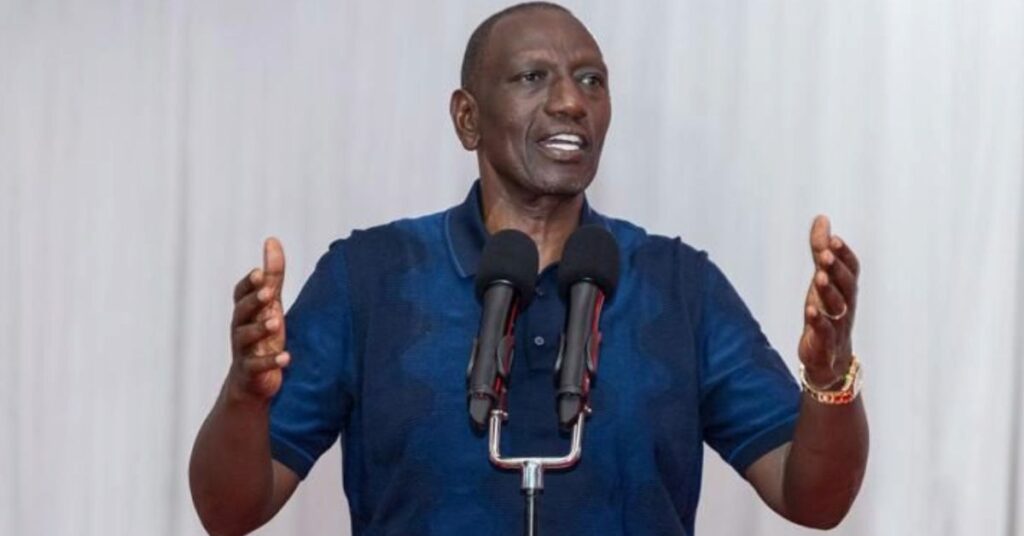
The Gachagua impeachment of October 2024 proceeded at a speed that drew comment across Kenya’s legal and political community. Charges were filed, debated, and voted on within days. Legal challenges were dismissed in rapid succession. Kithure Kindiki was installed as Deputy President within hours of the Senate confirmation. The pace and coordination of the process raised documented concerns about the independence of Parliament as an institution during a proceeding in which the executive had a clear preferred outcome. Whatever the merits of the charges against Gachagua, the manner of their processing set a precedent for how quickly a coordinated parliamentary majority can remove an officer of state when the executive signals it requires that outcome.
The IMF fiscal programme has been framed by the government as responsible correction of an inherited crisis. Its conditions have included reduced subsidies and increased revenue collection. Available household expenditure data indicates that the adjustment costs have fallen most heavily on lower-income Kenyans. The distance between that outcome and the bottom-up campaign’s promise remains the central unresolved tension of this administration.
Controversies
The ICC charges are a permanent part of the public record. The International Criminal Court found sufficient evidentiary basis to charge Ruto with crimes against humanity in connection with the 2007-2008 post-election violence, in which more than 1,300 people were killed. The prosecution did not secure a conviction. The prosecutor’s formal motion to terminate cited non-cooperation of witnesses and documented interference with the prosecution process. The case ended without a verdict, not with an acquittal, and the circumstances of its ending are as much a part of the record as the original charges.
Land matters have surfaced with regularity across Ruto’s career. The Weston Hotel dispute, in which the ownership of land in Langata has been contested through prolonged court proceedings, is one documented instance. A second occurred in 2015, when pupils from Lang’ata Road Primary School in Nairobi were teargas by police while protesting encroachment on their school playground. Media investigations and public reporting at the time connected the disputed land to the Weston Hotel development. Both episodes are on the public record.
The scale of Ruto’s personal asset holdings, including commercial land, buildings, and aviation interests, has not been explained through any publicly verifiable accounting of income from public service. No formal investigation into how that wealth was accumulated has been completed and published. These are documented facts about the state of formal accountability in Kenya, not assertions about any specific act.
Verdict
The documented record of William Ruto’s presidency shows a consistent gap between the commitments of the 2022 campaign and the outcomes that followed.
The Hustler Fund is a documented fiscal loss, with 19 million defaulters, a 68 per cent default rate, and no measurable impact on enterprise growth, according to the Kenya Human Rights Commission and the government’s own Auditor General.
The fertiliser programme produced some genuine reach to farmers but was compromised by a substandard-fertiliser scandal that went to Parliament and the DCI. Housing delivery stands at under 5,000 units against an annual target of 250,000.
SHIF is settling 34 per cent of claims and has produced documented cases of patients unable to access care. Employment data shows Kenya added fewer jobs in 2024 than in any of the previous five years.
The labour export programme that has been positioned as a response to unemployment has sent Kenyans into documented conditions of abuse in Gulf states while reducing pre-departure protection.
Against this record, Ruto retains real political skill and the demonstrated ability to adapt under pressure. The 2027 election will be Kenya’s formal moment to weigh the full evidence. That evidence is in this article.
Sources
IEBC, Presidential Election Results, August 15, 2022 (iebc.or.ke)
Kenya Supreme Court, Presidential Election Petition No. E005 of 2022, September 5, 2022
Kenya Human Rights Commission, “Failing the Hustlers” report, August 2025
Kenya National Bureau of Statistics, Quarterly Labour Force Survey, 2024 (knbs.or.ke)
Rural Private Health Association, SHA Facility Payment Survey, April-May 2025
New York Times, Saudi Arabia / Kenya domestic worker investigation, 2025
Semafor, “Kenya doubles down on labor export plan despite resistance,” June 2025
Auditor General of Kenya, Hustler Fund audit report, 2024
Hansard, National Assembly, Finance Bill 2024 proceedings (parliament.go.ke)
Frequently Asked Questions
What were William Ruto’s five main campaign promises in 2022?
Ruto’s five central commitments were: creating ten million jobs through the bottom-up economic model; building one million affordable housing units annually, funded through a housing levy; launching the Hustler Fund for small mobile loans; replacing NHIF with SHIF to expand health coverage; and subsidising fertiliser for small-scale farmers. Each was specific enough to serve as a direct accountability benchmark. The evidence against each of them is examined in this profile.
How many Hustler Fund borrowers defaulted and what does that cost taxpayers?
By August 2024, 19 million of the 21 million Kenyans who had borrowed from the Hustler Fund had defaulted, representing a default rate that peaked between 68 and 78 per cent. The Kenya Human Rights Commission estimated that KSh 340 was lost for every KSh 500 disbursed, with taxpayers bearing 71.5 per cent of net losses. The fund’s annual budget allocation was subsequently slashed from KSh 10 billion to KSh 300 million, and the KHRC called for the programme to be scrapped entirely.
Are the affordable housing units genuinely affordable for low-income Kenyans?
The government’s social housing category, designated for Kenyans earning below KSh 20,000 per month, starts at KSh 640,000 for a 20-square-metre studio. Buyers are required to pay a 12.5 per cent deposit upfront, meaning KSh 80,000 before occupation. For a household at that income level, that deposit represents four months of gross earnings. As of November 2024, the government had announced 4,888 units nearing completion across 17 counties, against a stated annual target of 250,000.
What is the evidence on Kenyan workers in the Middle East under the labour export programme?
A New York Times investigation published in 2025, based on more than a year of reporting, found that hundreds of Kenyan women employed as domestic workers in Saudi Arabia had been killed, and documented accounts of abuse. Human rights researchers concluded the government had prioritised increasing placement volumes over worker protection. In late 2024, the government actually reduced pre-departure training for labour migrants at the same time it was counting those placements as job creation. Kenya had previously banned labour migration to Gulf states in 2012 due to documented abuse; the ban was lifted in 2013.

[…] […]