The guy who cornered you outside the KPLC office offering to “push” your application for a fee is lying to you. Kenya Power’s own CEO has said it publicly: applying for a new electricity connection has never cost anything and never will. As of December 2025, the company stopped accepting manual applications altogether — everything now runs through their self-service portal, specifically to cut brokers and cartels out of the process. I went through the entire KPLC new connection application myself, screenshot by screenshot, and here’s exactly what it looks like, no middleman required.
Table of Contents
Why the Digital Shift Happened, and Why It Matters
Kenya Power moved to a fully digital, online-only application process in December 2025, closing manual applications at service centres and banking halls entirely. The company processed over 807,000 new connection applications in the three years prior, an average of more than 269,000 a year, and framed the shift explicitly around reducing turnaround times and increasing transparency in the application journey.
That transparency point isn’t new marketing language. When Kenya Power first launched its self-service portal in 2021, then-CEO Bernard Ngugi said plainly that electricity applications have never attracted any charges and will remain free, and that digitizing the process would help curb the opportunities middlemen and fraudsters had been exploiting. Current CEO Joseph Siror echoed the same reasoning when announcing the December 2025 mandatory shift, pointing to cases of rogue individuals posing as Kenya Power staff to defraud unsuspecting customers. Daily Nation has separately documented what that exploitation looks like on the ground: a cartel operating in Kamulu allegedly swindled hundreds of homeowners over roughly eight years, in some cases with insider assistance. The digital-only mandate continues an effort that’s been years in the making, not a one-off tech upgrade.
Before You Start — What You’ll Need
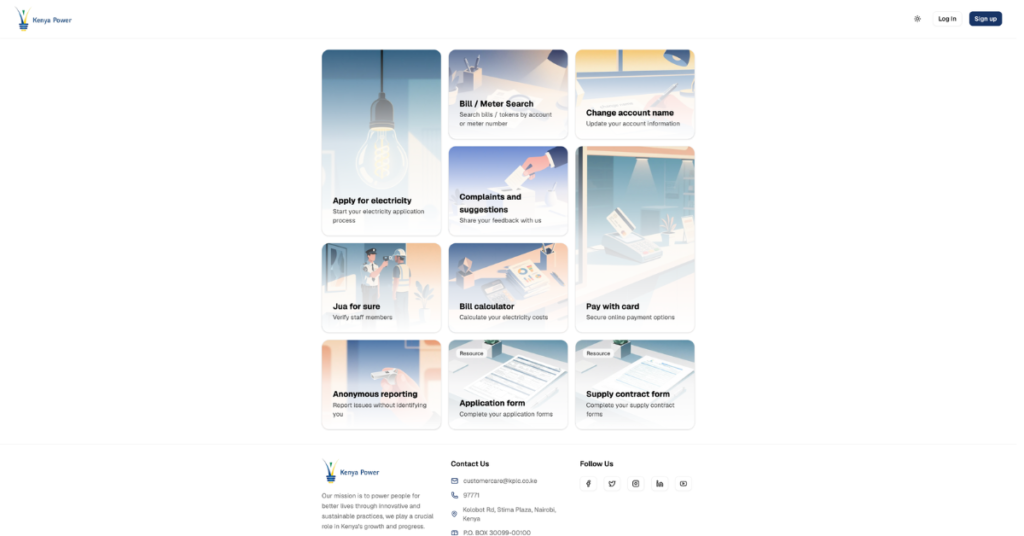
Go to the self-service portal and select Apply for electricity. You don’t need to create an account separately first, the application itself sets up your login using your email or phone number partway through. Before you start, have these ready as digital files:
- A valid ID document (National ID for citizens, passport for non-citizens, military ID for military personnel)
- Your KRA PIN certificate
- One ownership document for the property (title deed, lease agreement, shares certificate, or allotment letter)
One mistake to avoid, learned the hard way: upload actual image or PDF files, not video. A motion/video file will pass the upload step but throw an error when you try to submit the full application.
Step-by-Step: The Application
Choose Your Customer Type
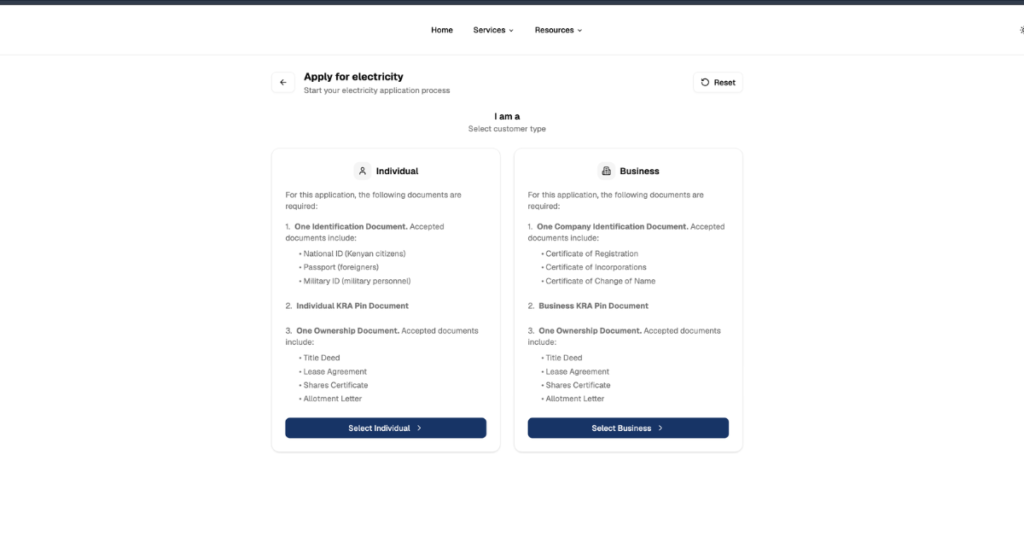
Select Individual or Business. This guide covers Individual; the business flow asks for company registration documents instead of a personal ID but otherwise follows the same steps.
Customer Details (5 Steps)
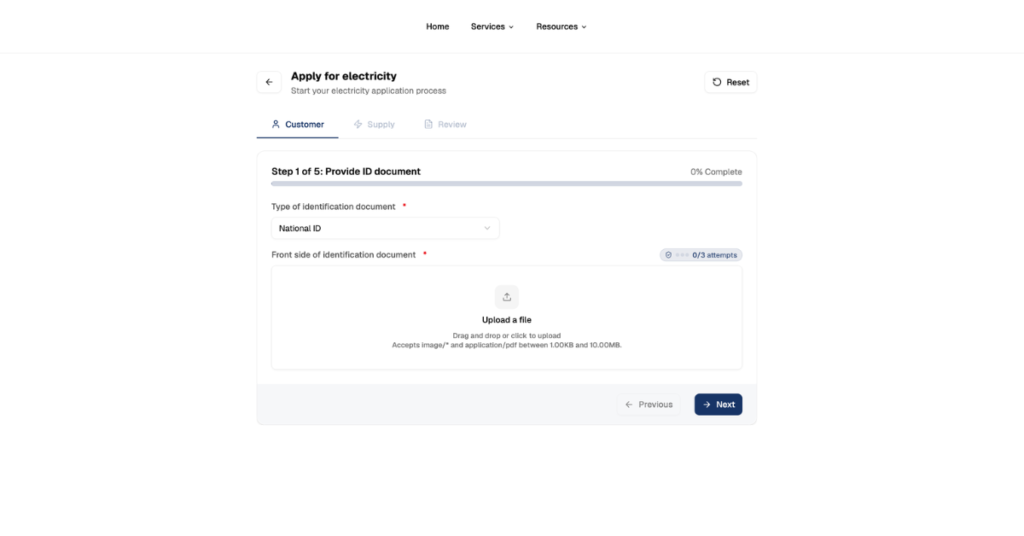
Upload the front of your ID. The system extracts your details automatically.
Step 2, which isn’t screenshotted here since it displays personal data pulled directly from your ID, is simply a confirmation screen: check what the system extracted and correct anything that’s wrong before continuing.
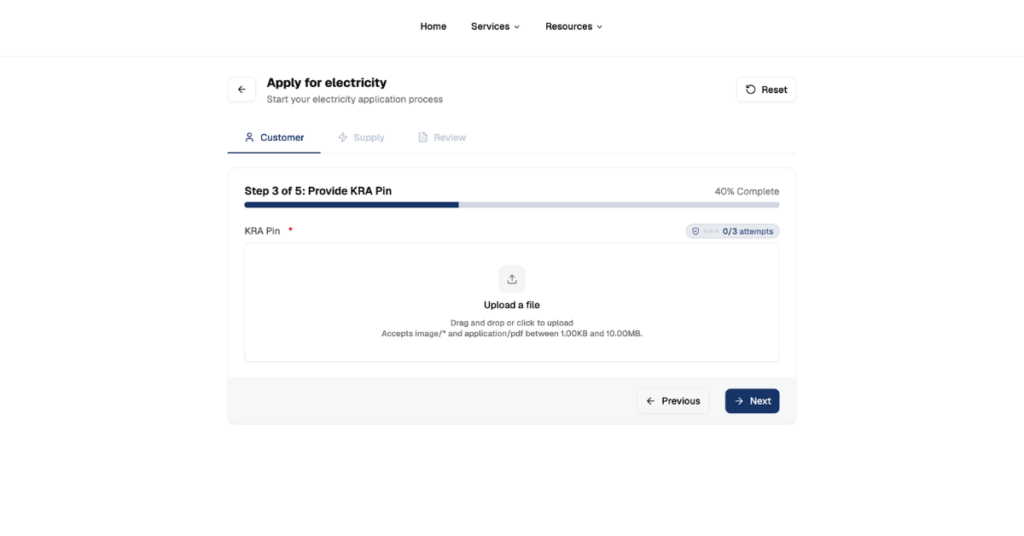
Upload your KRA PIN certificate the same way.
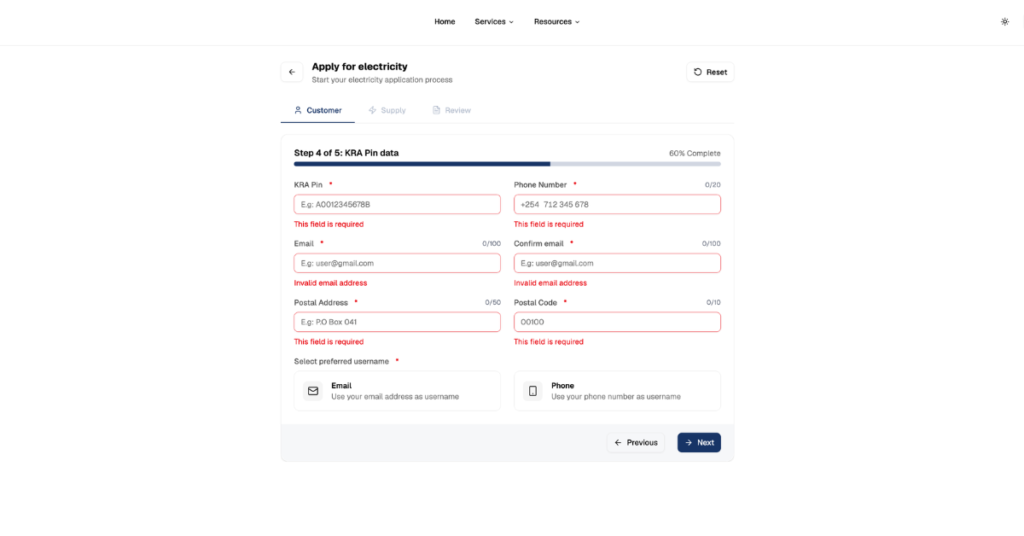
Fill in your phone number, email (entered twice to confirm), postal address, and postal code. Choose whether your username going forward will be your email or phone number, this is where your portal login actually gets created.
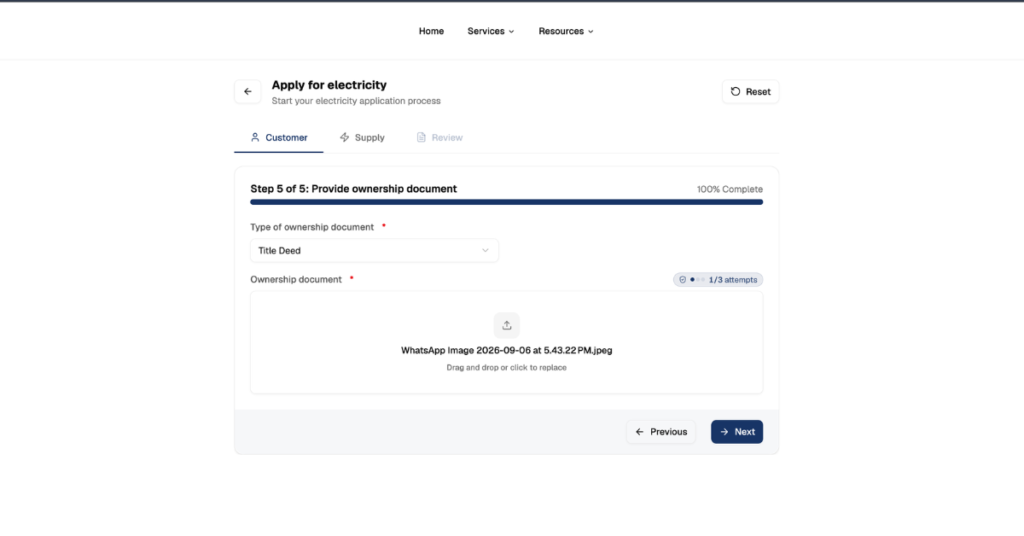
Select your ownership document type and upload it. Note the attempt counter shown on this screen, you get a limited number of tries per document, so double-check the file before uploading.
Supply Details (5 Steps)
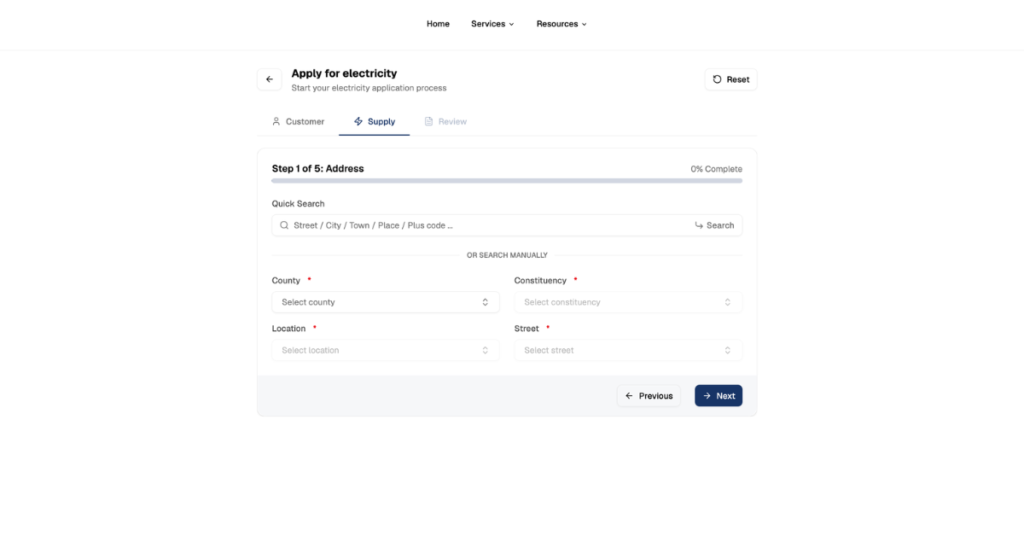
Search for your address, or fill in county, constituency, location, and street manually.
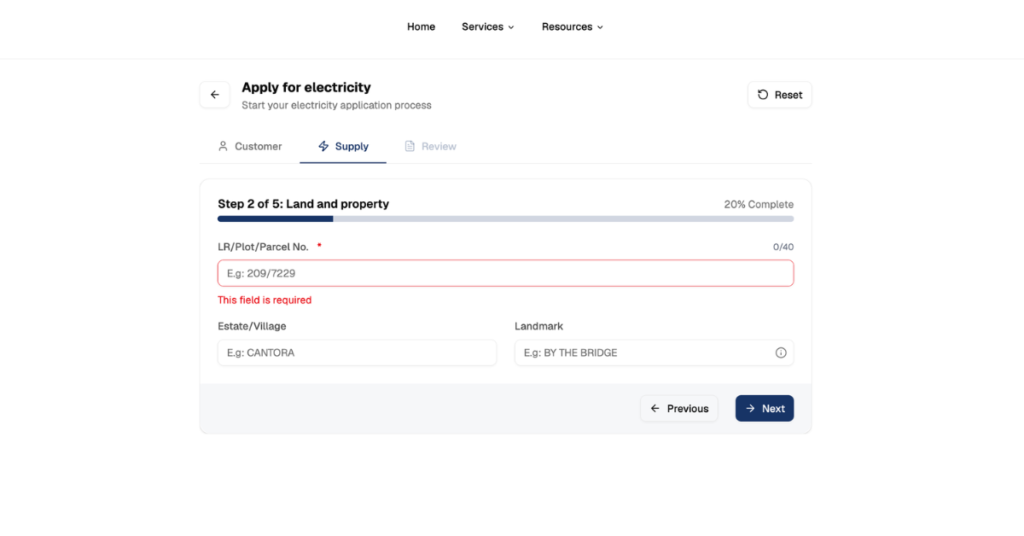
Enter your LR/Plot/Parcel number (this is on your ownership document), plus estate/village and any landmark that helps locate the property.
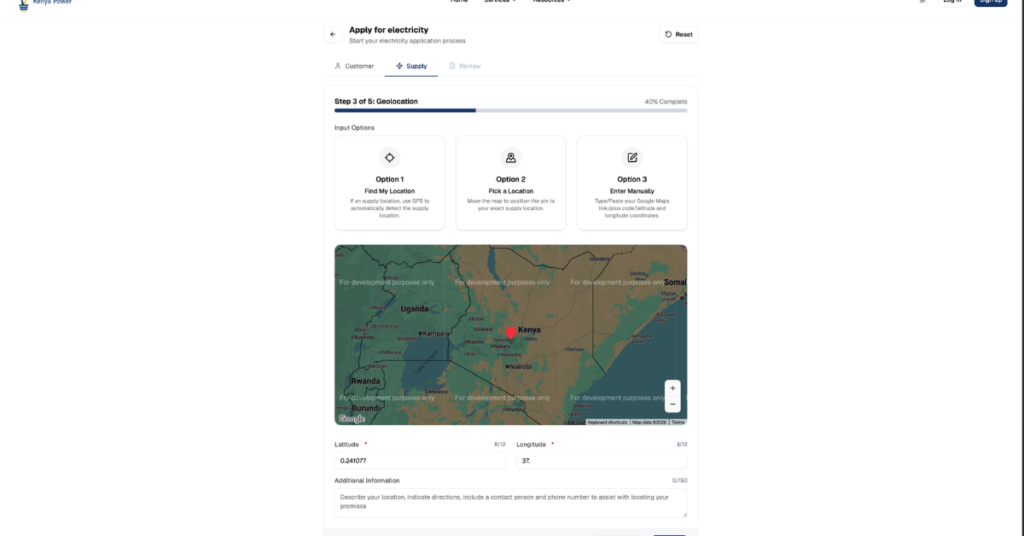
Pin your exact supply location three ways: let the portal find you via GPS, drag the map pin yourself, or type in coordinates or a Google Maps link manually. Add a description in the additional-information box, directions, a contact person, and a phone number, since this is what the site-evaluation team will use to actually find you.
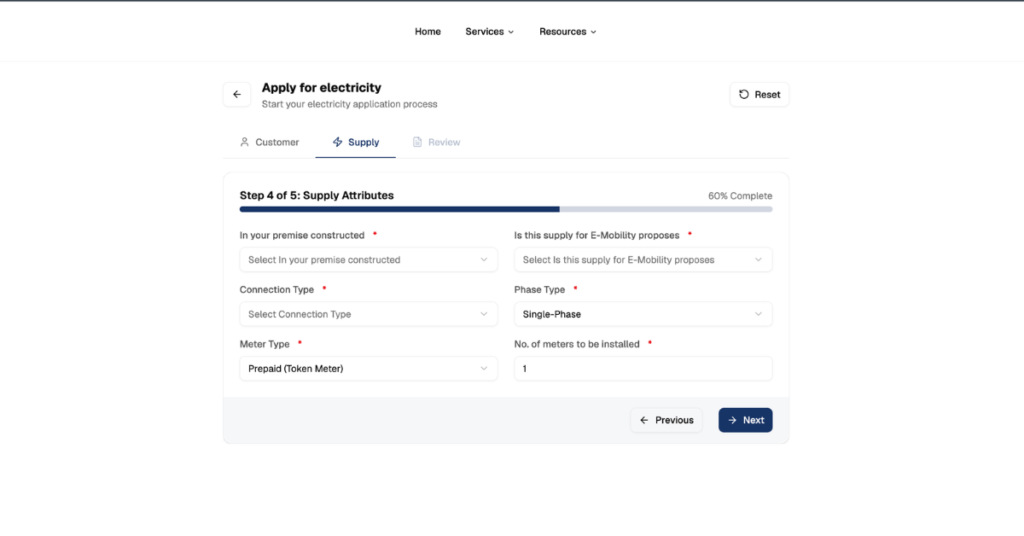
Specify whether the premises is already constructed, connection type, phase type (single or three-phase), meter type (prepaid token or postpaid), and number of meters needed.
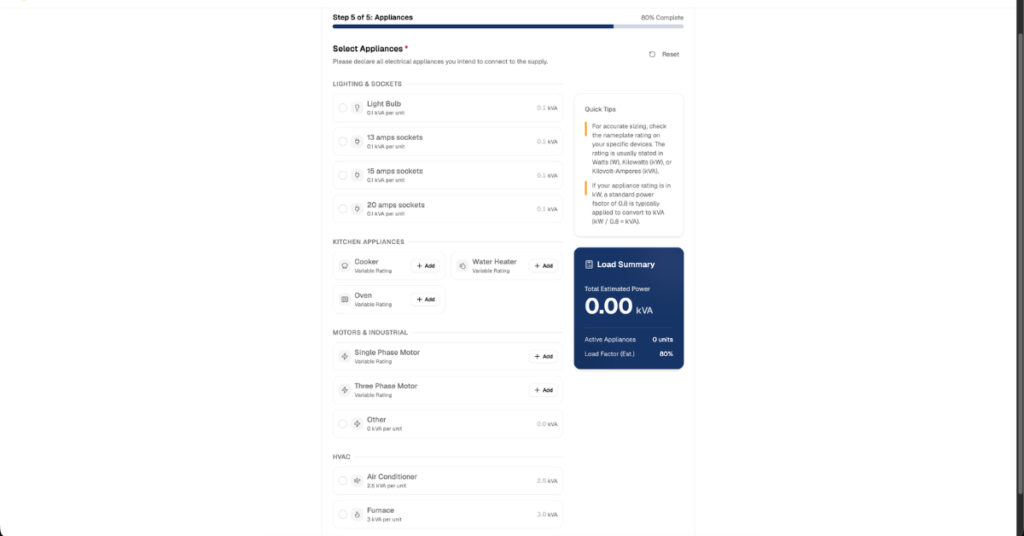
Declare the appliances you’ll run, so Kenya Power can size the connection correctly. The portal calculates your total estimated load in kVA as you go, check appliance nameplate ratings (in Watts, kW, or kVA) for accuracy rather than guessing.
Review and Submit
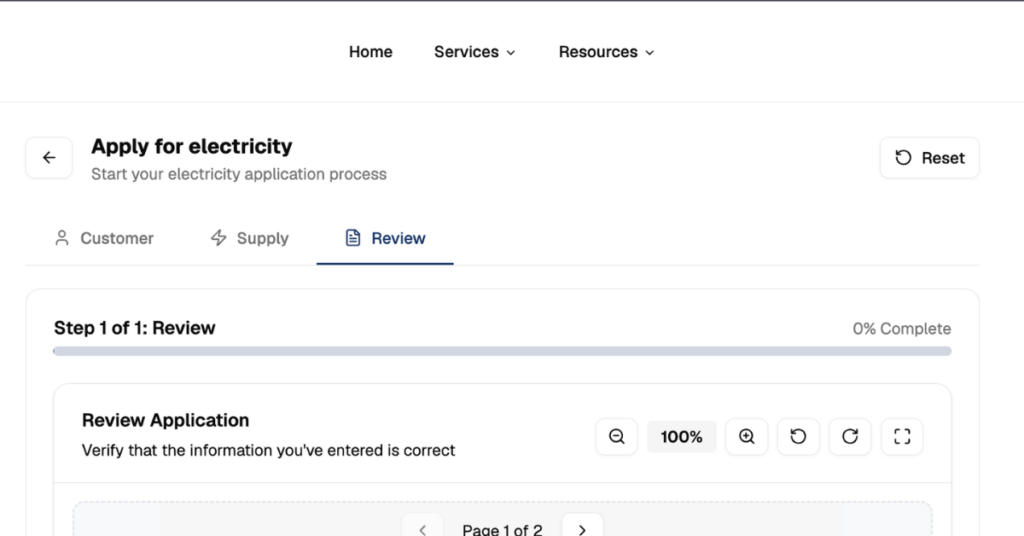
The review step shows your full application as a document preview, check every page carefully, since this is your last chance to catch an error before submitting. Once submitted, you’ll receive a reference number by SMS. That number is what triggers Kenya Power to schedule a site evaluation, and it’s also how you track your application status.
What the Free Application Doesn’t Cover
The application itself costs nothing. What comes after can. Once Kenya Power schedules and completes a site evaluation, you’ll receive a quotation, and this is where cost enters the picture:
- If your premises falls within 600 metres of an existing transformer, you typically qualify for the standard connection fee under the government’s Last Mile Connectivity Project, around KSh 15,000.
- If you’re further out and need a line extension or new transformer, the quote can run anywhere from roughly KSh 50,000 to over KSh 500,000, depending on distance and the infrastructure required.
Quotations are typically issued within 7 days for simple meter-only connections, and up to 28 days where new low-voltage lines or transformers are required. Once you receive your quote, you have 90 days to pay the engineering advance before the application is automatically withdrawn, so don’t sit on it if you intend to proceed.
This is also where the “system iko down” line brokers use to insert themselves tends to surface again, at the payment and installation stage rather than the application stage. Knowing the real cost range and the real timeline in advance is the best defence against being oversold on either.
What Happens After You Submit
Nothing further is required from you at this stage, no office visit, no follow-up call to “push” the file along, no fee. The next steps are the site evaluation and quotation described above, which is where a genuinely separate part of this process begins. I’m at that stage myself right now, and I’ll cover the evaluation, payment, and installation in a follow-up piece once I’ve actually been through it, not before, since guessing at that stage would defeat the point of a guide built on a real firsthand walkthrough rather than assumptions.
Frequently Asked Questions (FAQ)
Is applying for a Kenya Power connection really free?
Yes. Kenya Power CEO Bernard Ngugi has stated publicly that electricity applications have never attracted charges and will remain free. The connection quotation you receive after a site evaluation is a separate cost, which varies by distance from the nearest transformer.
Can I still apply in person at a KPLC office?
No. As of December 2025, Kenya Power accepts new connection applications exclusively through its online self-service portal and no longer processes manual applications at service centres or banking halls.
What documents do I need to apply?
A valid ID (National ID, passport, or military ID), your KRA PIN certificate, and one ownership document such as a title deed, lease agreement, shares certificate, or allotment letter.
How much will my actual connection cost?
If your premises is within 600 metres of an existing transformer, you typically qualify for the standard Last Mile Connectivity Project fee of around KSh 15,000. Connections requiring a line extension or new transformer can range from roughly KSh 50,000 to over KSh 500,000 depending on distance and infrastructure needed.
How long do I have to pay my connection quote?
Once issued, you have 90 days to pay the engineering advance on your quotation before the application is automatically withdrawn.
Do I need a broker to help with my application?
No. The digital portal was specifically built to eliminate the role brokers and fraudsters played in the old manual process, documented cases, including a long-running cartel scheme in Kamulu, show what that exploitation looked like before the shift.